How to take a selfie and a full-body photo for AI effects
Published
An effect never sees your photo the way you do. It gets the picture plus a short written instruction, and it changes one thing while the instruction tells it to keep everything else. So a good photo is one where the thing to change is visible and the things to keep are easy to read. Every tip below comes from the instructions the effects use and from the failures we recorded while testing them.
What the model copies
Every effect prompt ends with a line of things that stay the same: face, expression, pose, lighting and background. The model keeps what it can see and invents what it cannot. A photo that hides part of you makes it guess.
Each effect also names a subject in the singular ("the woman", "the man" or "the person"), and the photo step asks who is in the picture. Use one person per photo.
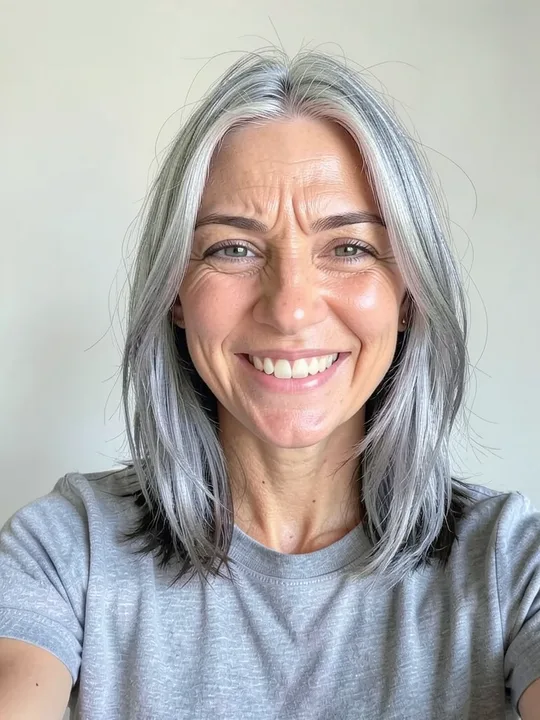
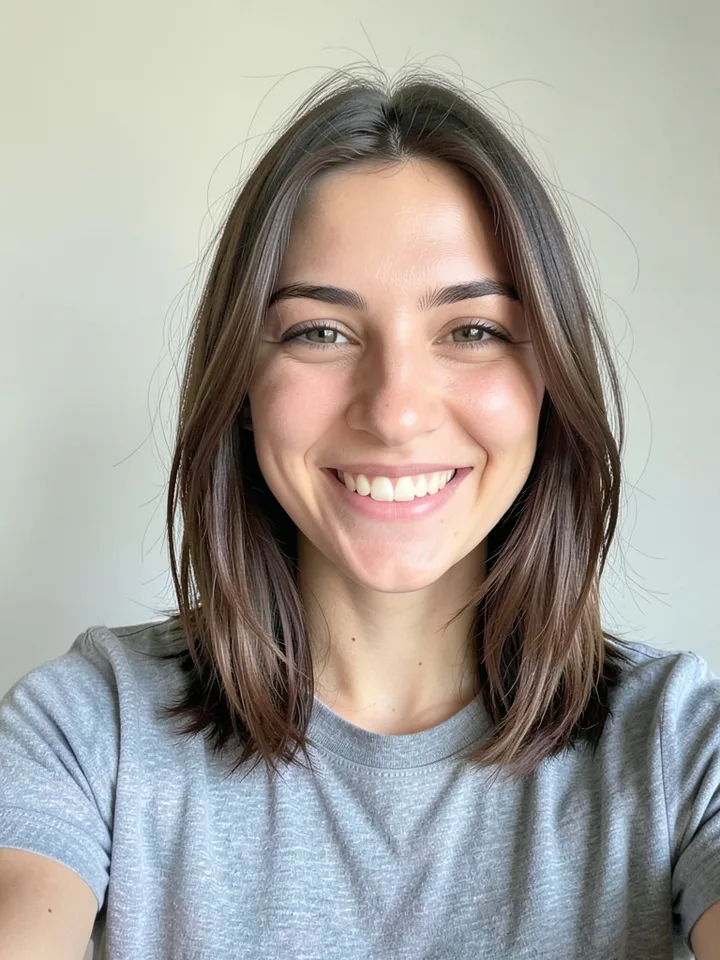
Our own examples start from two pictures. The selfie shows a face and shoulders, a clear forehead and a plain wall:
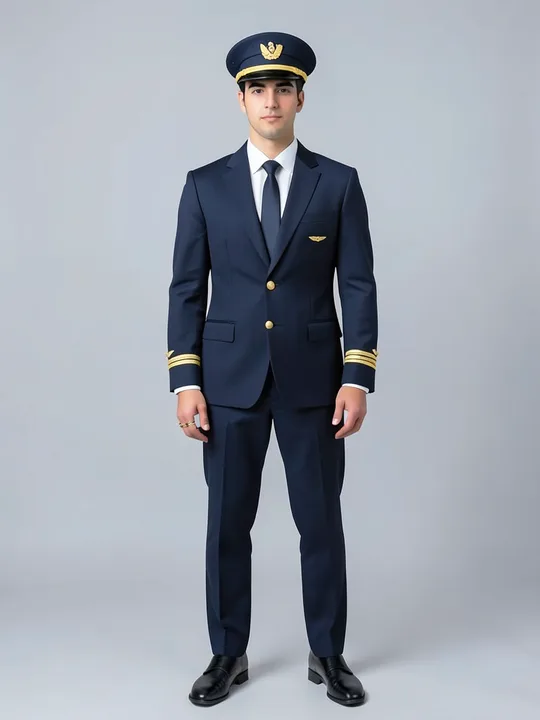
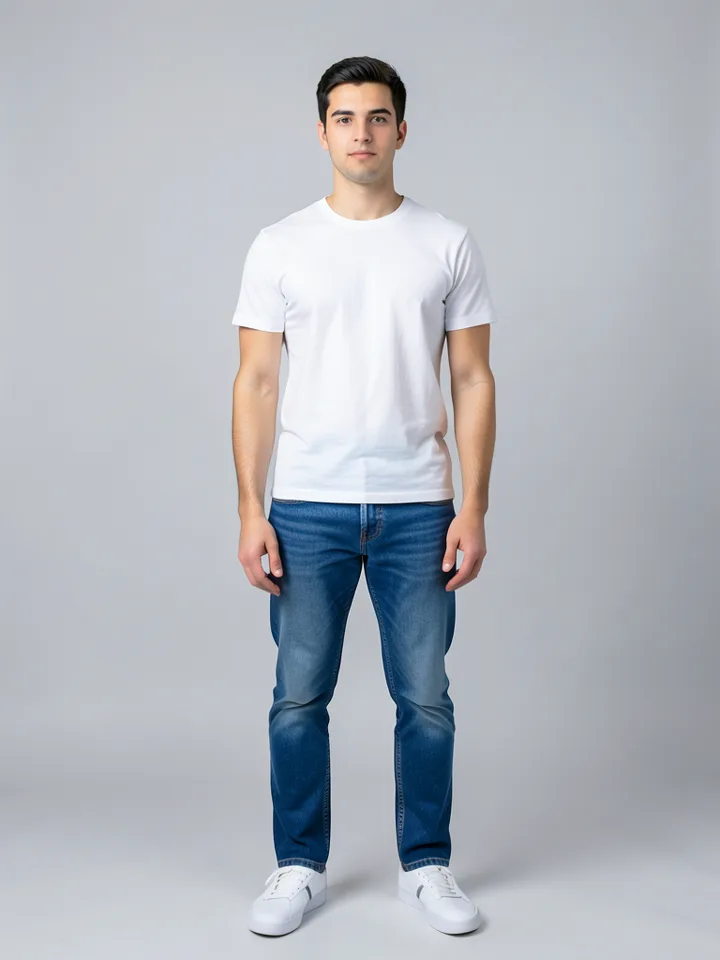
The full-body photo shows one figure from head to shoes:
Light and colour
The model copies the light of your photo. The comic mode asks for "the same colours as the photo at the same brightness", and the other prompts keep "lighting unchanged". Even light from the front gives it clean skin and hair to copy.
Colour is where we saw the most failures. Comic mode lightened medium and olive skin, most on full-body photos. Dark brown hair came out nearly black in several hair looks. In one hair look the example hair dropped from a medium brown to a navy black, and we hid several effects that kept changing hair or skin.
A photo that shows your true skin and hair colour keeps the result close to you:
- Stand facing a window or a lamp, not with the light behind you.
- Turn off beauty filters and warm tints. The model reads them as your real colour.
- Avoid coloured light. The model takes the colour of your skin from the pixels it gets.
Angle and distance for a selfie
Choose the Selfie frame, described as "Face and shoulders". Hold the camera at eye height, look into it and keep your head upright. The effects keep your pose, so a tilted head stays tilted.
Leave some space above your hair. In the royal look On the throne a gilded arch rises above the head, and on our examples the person came out about 20% smaller in the frame. A head touching the top edge has no room for that.
Your browser shrinks the photo to 1024 pixels on its longest side before it leaves your phone. Fill the frame with your face and shoulders. A small face in a wide photo ends up with few pixels, and the effect has little to work from.
What covers the face
An effect that changes a part of you needs to see that part. Blunt bangs draws a fringe across the forehead, and Slicked back combs the hair off a "fully clear" forehead and temples. If a hat, a hood or your hand covers the area, the model fills it in from nothing.
Clothes count too. Most prompts say your clothing "stays as it is", and a hat is clothing. Take it off for hair looks.
Eyes carry a recorded failure. In the horror look with webs around the eyes, the ink lines moved onto the irises and turned them grey in comic mode. Show your eyes clearly, so the model has no reason to redraw them.
Full-body photos
Many looks need a full-body photo, among them Boxer, Sleeve tattoos, Medieval Knight and Ball formal. The studio greys them out on a selfie with "Needs a full-body photo". Choose the Full body frame, described as "Head to toe".
What the prompts ask for explains the rules:
- Whole figure, feet in the frame. Ball formal ends with "polished black shoes", the knight with tall boots, and in Skipped leg day the "legs, trousers and shoes" must stay as they are. A cropped leg leaves nothing to keep.
- Hands in view. Boxer wraps both hands, Henna hands paints every finger and Sleeve tattoos run from the shoulder to the wrist. Hands in pockets or behind your back leave the model to invent them.
- Floor in view. Comic mode on a full-body photo needs to see the floor. Left alone, the model draws a long cast shadow across it, so the prompt asks for one small soft patch under the shoes.
Stand far enough back to fit the whole figure. A tall figure in a 1024-pixel photo is small, so keep full-body photos for body looks and use a selfie for hair. Our Muscle category shows what a full-body photo gives you.
Background
Effects keep the background unchanged, with a few exceptions such as the throne. Comic mode turns the background into one flat colour with the hue and lightness of your wall. A plain, evenly lit wall gives a clean result. A busy shelf behind you turns into noise.
What it cannot do
A good photo lowers the risk of a bad result. The model still sometimes changes hair colour, skin tone or eye colour, most often in comic mode. We have no wording yet that holds skin tone on all eight test people. A different photo or a new try can change the outcome.
When the safety check refuses a photo, no light fixes it, and the studio says "I cannot work with this photo". For how the pipeline works, read how AI photo effects work, and browse every look in all effects.